
Basement Waterproofing in London - What You Need to Know
Damp in your basement? The different waterproofing systems available, how they work and why choosing a Delta-approved contractor in London matters.
Basement Waterproofing in London: What You Need to Know
Water ingress is the single biggest challenge in basement construction. London's clay-heavy soil and high water table mean that waterproofing is not optional — it is essential. Get it wrong and you will be dealing with damp, mould and structural damage for years to come.
This guide explains the different waterproofing systems available and how to choose the right one for your project.
Why Waterproofing Is Critical in London
London sits on a mixture of clay, gravel and sand. Clay in particular holds water and exerts significant hydrostatic pressure against basement walls and floors. The water table in many parts of London is relatively high, meaning groundwater is never far below the surface.
Without proper waterproofing, water will find its way into your basement through cracks in the concrete structure, construction joints between walls and floors, around service penetrations, and through porous concrete or blockwork.
The Three Types of Basement Waterproofing
British Standard BS 8102 defines three types of waterproofing protection.
Type A — Barrier Protection Type A systems apply a waterproof barrier to the outside or inside of the structure. This includes tanking with cementitious or bituminous coatings, crystalline waterproofing products, and sheet membranes applied to the external face.
Type B — Structurally Integral Protection Type B uses a reinforced concrete structure designed to be watertight in itself. This requires careful design by a structural engineer and quality control during construction.
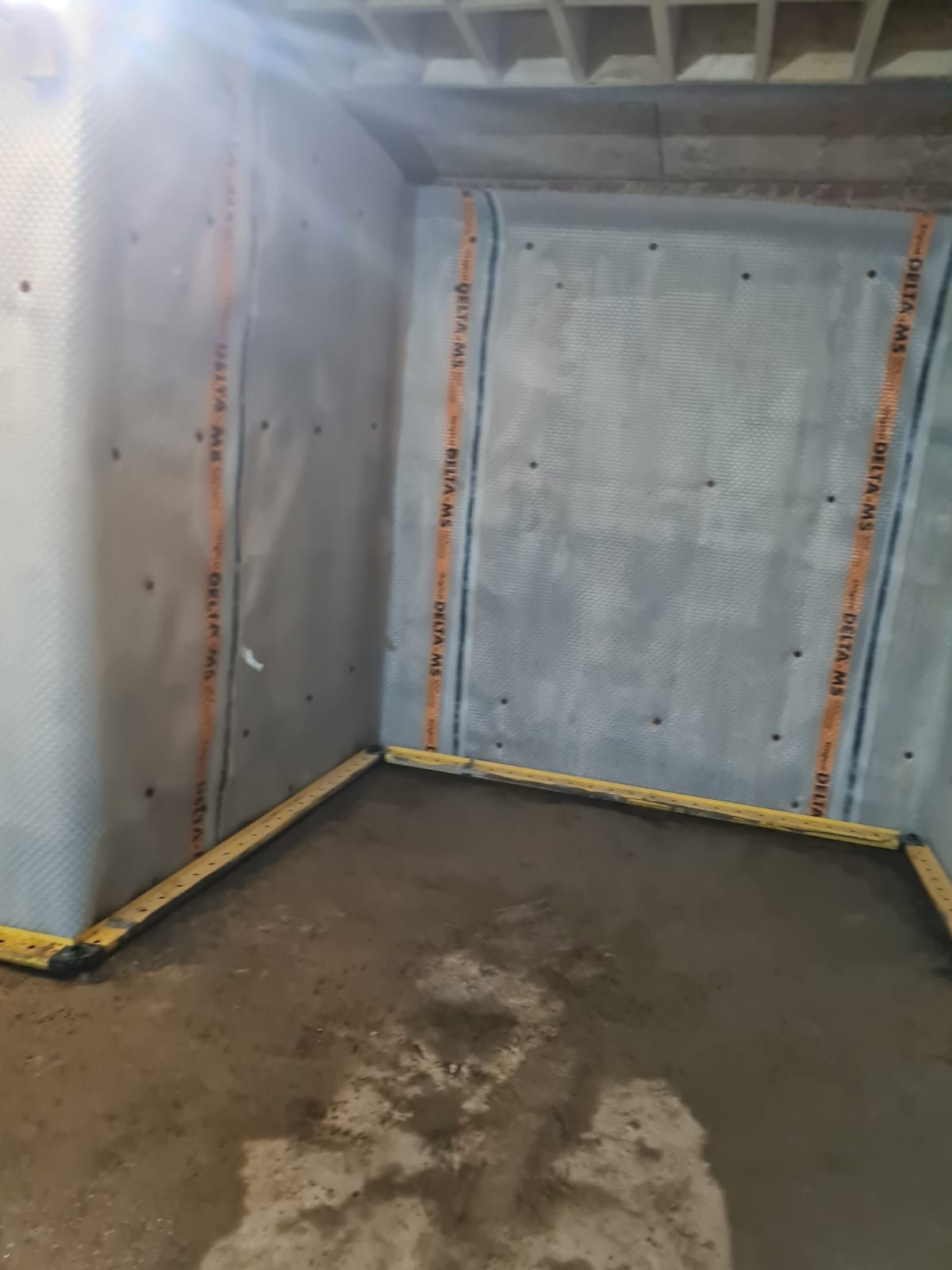
Type C — Drained Protection (Cavity Drain) Type C systems manage water rather than stopping it. A cavity drain membrane is fixed to the walls and floor, creating a void behind the membrane. Any water that penetrates is channelled into this void and directed to a sump pump. Type C is the most reliable system for existing basements and is widely used in London.
Why We Recommend Delta Cavity Drain Systems
Delta is the UK's market-leading manufacturer of cavity drain waterproofing systems. As Delta-approved contractors, we are trained and assessed to install their systems correctly. This means you get a manufacturer-backed guarantee, the installation meets Delta's quality standards, and you have recourse to Delta if any issues arise.
Sump Pumps and Drainage
Any Type C cavity drain system requires a sump pump to remove collected water. We install dual pump systems for redundancy, with battery backup to keep the pump running during power cuts, and high water alarms to alert you if water levels rise unexpectedly.
How Much Does Basement Waterproofing Cost?
As a rough guide: cavity drain membrane systems cost £50 to £100 per m², tanking systems cost £30 to £70 per m², and sump pump installation costs £1,500 to £3,500. We provide detailed, itemised quotes for every project.
Get a Free Waterproofing Survey
If you have a damp basement or are planning a new basement construction, contact us for a free survey and no-obligation quote. Call us on 07405 046475 or 020 8087 4829.
Explore Topics
Written by
Making Space Below Ground
Content creator and writer sharing insights and stories.


